
If you are driving through states with tinted windows over the holidays, the rule is simple and unforgiving: the law of the state you are physically in applies to your car, not the law of the state where you registered it. A tint level that is perfectly legal at home can be a citation four hours down the interstate. Front side window limits in the United States range from 20% visible light transmission in some states to essentially clear glass in others, which is why Thanksgiving and December travel produce a predictable wave of tint stops.
Visible light transmission, or VLT, is the percentage of light that passes through the glass and any applied film together. Lower VLT means darker windows. Every state sets its own VLT floor, and no state is obligated to honor another state’s tint law or another state’s medical exemption.
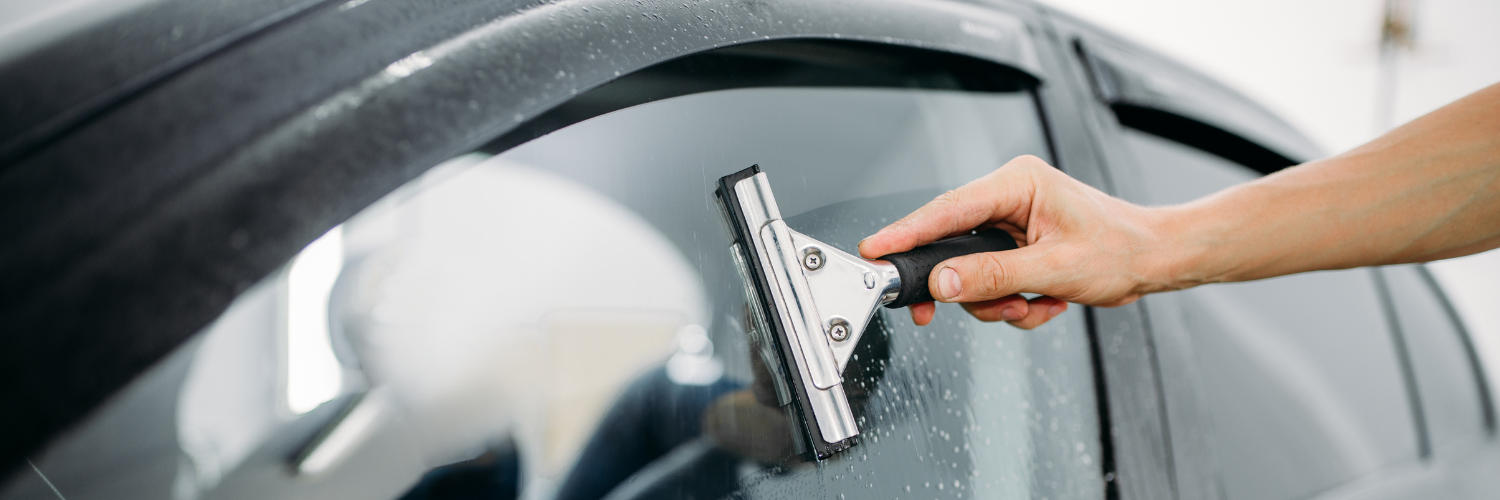
Is Driving Through States With Tinted Windows Legal?
Crossing state lines with tinted windows is legal as long as your tint meets the standard of whichever state you are currently in, and that is the part travelers underestimate. Vehicle equipment rules are enforced territorially, so an officer in a strict state is applying that state’s statute to your out-of-state plate. Being registered elsewhere is not a defense, and neither is the fact that your installer told you the film was legal.
Holiday weekends concentrate the problem. AAA projected that a record 81.8 million people would travel at least 50 miles from home over the 2025 Thanksgiving period from Tuesday, November 25 through Monday, December 1, with at least 73 million of them traveling by car, close to 90 percent of all Thanksgiving travelers, according to the AAA Thanksgiving travel forecast. More cars on unfamiliar roads means more contact with agencies that enforce tint differently than the one you are used to.
According to Derek Anderson at ForeverTint: “A road trip is the one situation where drivers discover that tint law is fifty separate laws, not one, and the time to sort your paperwork out is before you load the car.”
Which States Are Strictest on Tint for Holiday Travelers?
The strictest states for a traveler are the ones that require front side windows to be nearly clear, and the most permissive set a numeric floor you can actually hit with aftermarket film. The table below shows four verified state standards that illustrate the full spread, drawn directly from each state’s statute. Every one of them also contains a medical provision, though what that provision allows differs: in California it covers removable sun-screening devices or clear UV film, not darker tinted film.
| State | Front side window standard | Statute | Medical provision |
|---|---|---|---|
| New Mexico | Light transmission of not less than 20 percent | NM Stat. 66-3-846.1(B)(2) | Physician or optometrist affidavit, vehicle registered in the state |
| Texas | Light transmission of 25 percent or more, with a 3 percent variance allowed | Tex. Transp. Code 547.613 | Defense to prosecution for a driver or passenger who must be shielded from the sun |
| Arizona | Light transmission of 33 percent plus or minus 3 percent | Ariz. Rev. Stat. 28-959.01 | Exemption issued on written physician attestation |
| California | Only clear, colorless material with at least 88 percent transmittance | Cal. Veh. Code 26708(d)(1) | No darker film for medical reasons; removable sun-screening devices with a physician’s letter under 26708(b)(10), or clear UV film with a dermatologist’s certificate under 26708(e) |
You can read the underlying text for New Mexico, Texas, Arizona and California. Laws change, so confirm the current standard for every state on your route before you leave.
Why Are Tint Laws Different in Every State?
Tint laws vary because the federal rule governs manufacturers, not owners. Federal Motor Vehicle Safety Standard 205 requires at least 70% light transmittance in windows requisite for driving visibility on new passenger cars, and NHTSA explains the purpose is “to ensure adequate visibility through the windows, thereby reducing the risk of a motor vehicle crash.” That standard binds automakers, dealers and repair businesses, so once a car is sold, aftermarket film falls entirely to state law.
The result is fifty separate answers to the same question, written by fifty legislatures with different climates, different enforcement histories and different officer safety concerns. There is no national reciprocity agreement for window tint the way there is for driver licensing.
Does a Medical Tint Exemption Work in Other States?
A medical tint exemption is written by and for one state, and no other state is required to honor it. New Mexico’s statute makes this explicit, applying its medical affidavit provision to “a motor vehicle registered in this state” whose owner holds an affidavit from a physician or optometrist licensed to practice in that state. Arizona’s exemption is issued by the state for a vehicle belonging to the qualifying person. Neither text contemplates a visiting driver’s paperwork. Some states have no medical exemption at all, and California and Pennsylvania do not allow darker film for medical reasons, so documentation that works at home may carry no legal weight on part of your route.
In practice, an officer in another state may treat legitimate documentation as context even when it is not legally binding there. That is discretion, not a right. If you regularly drive in more than one state, our guide to how a tint exemption works in other states covers the reciprocity question in detail, and what a medical window tint exemption is explains the underlying framework.
What Happens if You Get Pulled Over Driving Through States With Tinted Windows?
Expect the officer to measure your front side windows with a handheld meter and to write the reading on the citation if it misses that state’s limit. Keep your medical documentation in the glove box and present it calmly if you have it. Physician documentation for darker window tint does not guarantee you will not be stopped or cited, because officers retain discretion, and if you are cited, the court decides the outcome. Ask whether the citation is correctable, since some tint violations are written as fix-it tickets that can be resolved once the vehicle is brought into compliance or the paperwork is shown.
Should You Remove Your Tint Before a Long Trip?
For most travelers, no. Removing and reinstalling film for a single trip costs real money, risks damage to rear defroster lines, and leaves you without the sun protection you installed it for in the first place. The better move is to know the strictest state on your route and to carry documentation if a medical condition is the reason your windows are dark.
Removal starts to make sense in narrow cases: if your film is extremely dark, if your route runs through several of the strictest states, or if you are already dealing with an unresolved citation. Otherwise, treat paperwork as the cheaper insurance.
What Should You Carry on a Holiday Road Trip?
Carry your physician documentation in the vehicle at all times, not on your phone, because a printed document survives a dead battery and reads as more legitimate at the roadside. Add your registration, proof of insurance, and if your state issues one, the permit, certificate, sticker or decal that goes with your exemption.
If you do not have documentation yet, the timing still works for a Thanksgiving departure. With the Medical Window Tint Exemption Package, you complete a short questionnaire from home and an independent licensed physician reviews your medical history by chart review or, occasionally, a brief phone call, with no video appointment and no in-person exam. Most reviews are completed the same day and documentation is emailed within 72 hours; in Florida, the physician-signed Form HSMV 83390 is provided to you to submit to the FLHSMV. If the physician determines you do not qualify, you receive a full refund. To start, See If You Qualify.
Frequently Asked Questions
Whose tint law applies when you drive out of state?
The law of the state you are physically driving in applies to your vehicle. Registration in another state is not a defense, because vehicle equipment rules are enforced territorially. That means a tint level that passes inspection at home can be a violation on an interstate a few hours away, so check the strictest state on your route before you leave.
Will another state honor my medical tint exemption?
It is not required to. Medical exemptions are created by individual state statutes and are generally written for vehicles registered in that state or for people evaluated by a physician licensed there. Many officers in other states do treat valid physician documentation as meaningful context, but that is discretion rather than a legal right, so carry it and expect a conversation.
Do police pull over out-of-state cars for tint?
Yes. Tint is visible from outside a moving vehicle, which makes it one of the most common reasons for an equipment stop, and an out-of-state plate does not shield you. Agencies in states with strict front window limits tend to enforce them consistently regardless of where the car is registered.
Should I remove my window tint before a road trip?
Usually not. Removal and reinstallation is expensive, can damage rear defroster lines, and removes the sun protection you installed the film for. Removal is worth considering only if your film is very dark, your route crosses several of the strictest states, or you already have an unresolved citation. For most drivers, carrying documentation is the cheaper and more practical option.
Conclusion
Driving through states with tinted windows is a paperwork problem more than a film problem. The law that matters is the law of the state under your tires, front side window standards swing from a 20 percent floor to essentially clear glass, no state has to recognize another state’s medical exemption, and some states have no medical exemption at all. Know the strictest state on your route, keep your physician documentation in the vehicle, and give yourself a few days of lead time before the holiday drive. Have questions about your route or your state’s paperwork? Contact Us Today.
This article is for general informational purposes and is not legal or medical advice. Physician documentation for darker window tint does not guarantee you will not be stopped or cited; officers retain discretion, and requirements vary by state.