
Here is the short, honest answer to how dark can you tint with a medical exemption: darker than your state’s standard limit, but not as dark as you want. A medical exemption raises the ceiling. It does not remove it. Most programs that grant a darker level stop somewhere in the 20% to 35% VLT range on front side windows, and windshield rules stay strict almost everywhere.
VLT stands for visible light transmission, the percentage of visible light that passes through the glass and film together. Lower VLT means darker tint. A medical window tint exemption is physician-signed documentation that a driver has a condition making reduced light transmission medically necessary, which is what allows a level below the standard state limit.
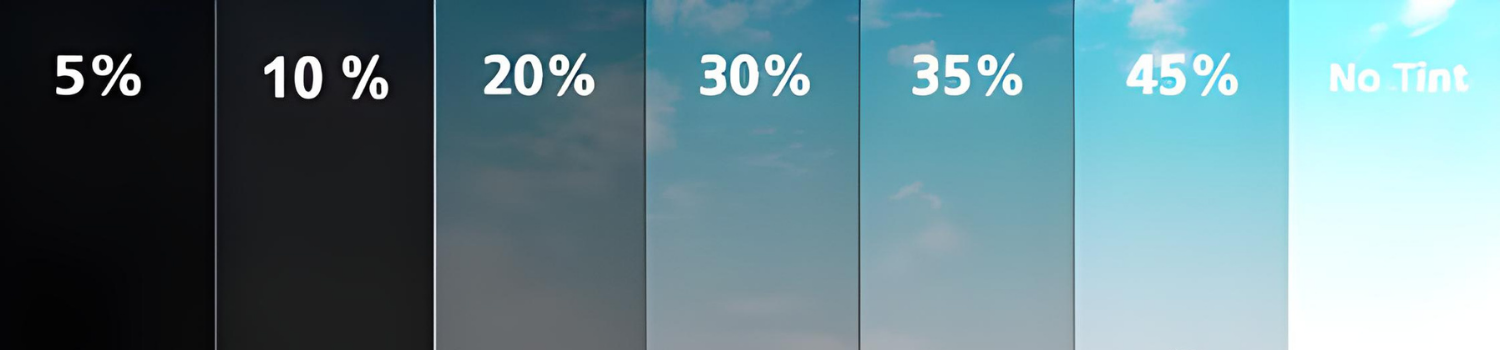
How Dark Can You Tint With a Medical Exemption?
In most states a medical exemption lets you run front side windows somewhere between 20% and 35% VLT, compared with standard limits that range from roughly 20% in the most permissive states to 70% in states like California and Pennsylvania. A few states, including New Jersey, Vermont, Michigan and Indiana, allow effectively no aftermarket film on front windows without an exemption, so the exemption is the difference between legal tint and none at all.
What no state does is hand out unlimited darkness. Claims that a medical exemption lets you run 5% limo tint on the front doors are the most common piece of misinformation in this category. Agency-review states often publish an explicit floor: ForeverTint’s state guides note that Nevada generally does not approve below 20% VLT and Wyoming generally does not approve below 25% VLT.
According to Derek Anderson at ForeverTint: “A medical exemption is permission to go darker than the standard limit for a documented medical reason, not permission to ignore the limit entirely.”
Why Isn’t a Medical Exemption Unlimited?
A medical exemption is not unlimited because the underlying tint rules exist for visibility and crash risk, and no state is willing to trade that away completely. The federal baseline makes the reasoning explicit. Federal Motor Vehicle Safety Standard 205 requires at least 70% light transmittance in windows requisite for driving visibility on new passenger cars, and NHTSA states that “the primary purpose of this requirement is to ensure adequate visibility through the windows, thereby reducing the risk of a motor vehicle crash.”
That standard binds manufacturers, dealers and repair businesses rather than individual owners, which is why aftermarket tint is governed by state law. States inherited the same logic: a driver still needs to see cross traffic at night. The medical case sits on the other side of the ledger. A 2016 study in JAMA Ophthalmology found that across 29 vehicles from 15 manufacturers, side windows blocked only 71% of UVA light on average, in a range of 44% to 96%, while windshields blocked an average of 96%. Side glass is the gap medical tint closes, and the exemption floor is where those two interests meet.
What Are the Typical VLT Floors by State Mechanism?
The floor you can reach depends less on your diagnosis than on how your state administers exemptions, and states fall into three mechanisms: physician documentation alone, physician documentation plus an agency-issued credential, or no formal program at all.
| State mechanism | Who sets the darkness level | Typical front-side floor with documentation | Windshield |
|---|---|---|---|
| Physician documentation only, carried in the vehicle (roughly 19 states) | The state statute sets the floor; the physician documents medical necessity | Commonly 20% to 35% VLT. Some statutes print no number and expect a reasonable documented level | Strict. Usually only the strip above the AS-1 line |
| Physician documentation plus agency approval (roughly 22 states; a permit, certificate, sticker or decal is issued) | The reviewing agency approves a level and records it on the credential | Commonly 20% to 35% VLT, with published floors in some states | Strict. The credential rarely covers the windshield |
| No formal state exemption program (a handful of states) | No state-issued level exists, so the standard statutory limit still applies on paper | No official floor is granted; physician documentation is supporting evidence, not a permit | Strict. Standard windshield rules apply unchanged |
Laws change, and the mechanism is what determines your paperwork, so confirm the details on your own state page before you book a tint shop. The fastest way to do that is to See If You Qualify and read the guide for your state.
Can You Tint Your Windshield With a Medical Exemption?
Almost never. Windshield rules are the strictest part of every state tint code, and a medical exemption rarely changes them. Most states allow tint only above the AS-1 line, the manufacturer’s mark near the top of the windshield, or within the top 4 to 6 inches where no AS-1 line is marked. The windshield is the primary field of view, so that restriction survives almost every exemption program.
A small number of states will consider a clear or very light UV-blocking windshield film for documented photosensitivity, but that is the exception and it is handled as a separate request. If a shop tells you your medical documentation covers a tinted windshield, verify that against your state’s published rules first.
How Dark Can You Tint With a Medical Exemption on Rear Windows?
Rear windows are the one place drivers usually already have room, exemption or not. Many states allow any level of darkness on rear side windows and the back glass when the vehicle has dual functioning side mirrors, which is why factory privacy glass on SUVs and trucks sits near 15% to 20% VLT and stays legal. If your only goal is dark rear glass, you may not need an exemption.
What Happens If Your Tint Is Darker Than Your Exemption Allows?
If your film is darker than the level your exemption covers, the exemption does not protect the excess, and an officer measuring 12% VLT against a document that supports 30% is looking at a violation. Get the physician’s approved level in hand before the film goes on; removal and reinstallation costs more than ordering correctly once.
Be clear about what any documentation can and cannot do at the roadside. Physician documentation for darker window tint does not guarantee you will not be stopped or cited, because officers retain discretion. Keep it in your vehicle at all times. In ForeverTint’s experience, drivers who take the ticket to court with their documentation often have it dismissed.
How Do You Find the Exact Limit for Your State and Condition?
The exact limit comes from two places: your state’s tint statute and the level a licensed physician will document for your condition. An online review settles both at once. The Medical Window Tint Exemption Package includes a physician chart review or a brief two to ten minute phone verification, with no video appointment and no in-person exam, and the signed state-specific document is emailed the same day in most cases and within 72 hours at the outside. Company figures for 2026 show more than 20,000 patients served, about 1 in 50 applicants not approved, and a full refund if the physician determines you do not qualify.
For background on the legal framework, see what a medical window tint exemption is, and for the measurement side, read our explainer on what VLT means for window tint. Drivers can also see how the documentation performs in the real world in the Trustpilot record, a 4.3 out of 5 TrustScore from 33 reviews as of September 2026.
Frequently Asked Questions
Can you get 5% limo tint on the front windows with a medical exemption?
No state program is designed to approve 5% VLT on front side windows. Most exemptions land in the 20% to 35% VLT range on the front doors, and agency-review states often publish a floor they will not go below. The unlimited-darkness claim is the most common myth in this category and can leave you paying to remove film.
Does a medical exemption cover every window on the car?
Usually not. Most exemptions focus on the front side windows, where standard limits are tightest and the medical need is clearest. Rear side windows and the back glass are already permissive in many states when the vehicle has dual side mirrors, and the windshield is rarely covered by medical documentation at all.
Who decides the VLT level on my exemption?
Two parties decide together. Your state sets the legal floor through its tint statute or the agency that issues the permit, and a licensed physician documents the level that is medically appropriate for your condition. Where an agency issues a certificate or sticker, the approved level is printed on that credential.
Can I install darker tint first and get the exemption afterward?
You can, but it is the more expensive order of operations. If the physician documents a level lighter than the film already on the car, the exemption will not cover the difference. Getting the approved level in writing first lets your installer match the film to it exactly.
Conclusion
The realistic answer to how dark can you tint with a medical exemption is a level somewhere between 20% and 35% VLT on front side windows in most states, with windshield rules staying strict and rear windows often already permissive. An exemption is a documented, legal step up from the standard limit, not a blank check, and knowing your state’s floor before the film goes on saves money and hassle. Want help figuring out what your state allows? Contact Us Today.
This article is for general informational purposes and is not legal or medical advice. Physician documentation for darker window tint does not guarantee you will not be stopped or cited; officers retain discretion, and requirements vary by state.