
If bright light causes you real pain rather than mild annoyance, you may well qualify for a light sensitivity window tint exemption. Photophobia is recognized by state tint exemption programs across the country, whether it comes from migraine, an eye condition, an autoimmune disease, a medication or recent eye surgery. What decides the outcome is not the label on your condition but whether a licensed physician will document that reduced light transmission in your vehicle is medically appropriate.
Photophobia is abnormal sensitivity to light that produces pain, squinting, tearing, headache or the urge to close the eyes at light levels most people tolerate easily. It is a symptom rather than a disease, which is why it shows up attached to many different diagnoses.
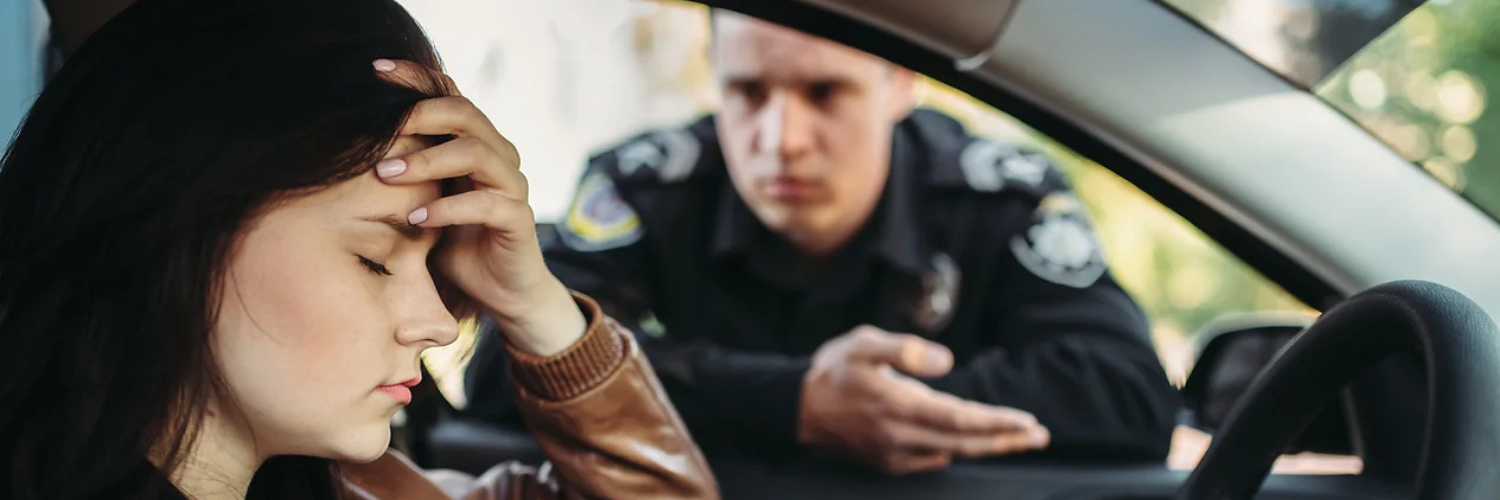
Do You Qualify for a Light Sensitivity Window Tint Exemption?
Most drivers with documented photophobia do qualify, because almost every state program asks a physician to certify medical necessity rather than to match a published diagnosis code. That structure works in your favor: light sensitivity is a symptom a physician can describe directly, and the connection to driving is easy to state. The request succeeds or fails on the quality of that documentation.
Light sensitivity is also far more common than most drivers assume. The American Migraine Foundation reports that between 85% and 90% of people with migraine experience sensitivity to light, among roughly 40 million Americans living with migraine. The Lupus Foundation of America states that 40% to 70% of people with lupus find their disease is made worse by exposure to ultraviolet rays from sunlight or artificial light, and it specifically advises people with lupus to consider tinting the windows of their car.
According to Derek Anderson at ForeverTint: “Light sensitivity is one of the easiest conditions for a physician to document, because the patient can describe exactly what happens to them the moment they get into a sunlit car.”
What Is Photophobia and What Causes It?
Photophobia is a neurological and ophthalmic symptom, not a fear of light, and it happens when light signals from the eye are amplified along pathways that also carry pain. The result is that ordinary daylight can feel piercing. Some people experience it constantly, some only during a flare, and some only after an injury, an illness or a change in medication. The cause matters because it shapes what your physician writes: a migraine-related note reads differently from one describing post-surgical corneal sensitivity, even though both support the same request.
Which Conditions Cause Light Sensitivity Severe Enough to Qualify?
The conditions that most often support a light sensitivity exemption fall into five groups: migraine and headache disorders, eye disease and eye surgery, autoimmune and inflammatory disease, neurological injury, and medication-induced sensitivity. The table below shows what each group looks like behind the wheel.
| Cause group | Example conditions | How it shows up while driving |
|---|---|---|
| Migraine and headache disorders | Light-triggered migraine, chronic migraine, cluster headache | Sunlight through side glass can start or intensify an attack during a commute |
| Eye disease and eye surgery | Dry eye disease, corneal abrasion or dystrophy, uveitis, cataract, iritis, recent LASIK or cataract surgery, dilated pupils | Pain, tearing and halos around headlights and reflected sunlight |
| Autoimmune and inflammatory disease | Lupus, multiple sclerosis, dermatomyositis, Sjogren syndrome | Light exposure can trigger symptom flares as well as eye discomfort |
| Neurological injury and illness | Concussion and post-concussion syndrome, traumatic brain injury, meningitis recovery, blepharospasm | Glare causes fatigue, dizziness, nausea and slowed reactions |
| Medication-induced sensitivity | Certain antibiotics, retinoids, diuretics, NSAIDs, chemotherapy agents, atropine drops | Temporary but genuine sensitivity that lasts as long as treatment does |
Always consult with your healthcare provider about your condition; only a licensed physician can determine whether darker window tint is medically appropriate for you.
Does Darker Tint Actually Help With Light Sensitivity While Driving?
Darker window film reduces the amount of light reaching your eyes inside the cabin, which is the direct mechanism photophobia patients care about, and factory glass does surprisingly little of that work on its own. A 2016 study in JAMA Ophthalmology measured 29 vehicles from 15 manufacturers and found windshields blocked an average of 96% of UVA light while side windows blocked only 71% on average, in a range of 44% to 96%. Only 4 of the 29 vehicles had side windows blocking more than 90%.
There is a road safety dimension as well. Redelmeier and Raza, publishing in Medicine in 2017, analyzed 11,095 life-threatening motor vehicle crashes between 1995 and 2014 and found a 16% increased risk of a life-threatening crash during bright sunlight, with a 95% confidence interval of 9% to 24%. A driver who is squinting, shielding their eyes or blinking through pain is not scanning the road, and that is the practical safety case behind medical tint.
What Does a Physician Need to Document?
A physician needs three things on the page: the diagnosis or documented symptom, a plain statement that light exposure causes harm or impairment, and a statement that reduced light transmission is medically appropriate. Beyond that, your state’s mechanism decides the format. In roughly nineteen states the physician’s signed document is the entire process and you simply keep it in the vehicle. In roughly twenty-two states an agency reviews it and issues a permit, certificate, sticker or decal.
What Goes Into a Light Sensitivity Window Tint Exemption Document?
At minimum the document should name you, name the condition or symptom, state medical necessity for darker window tint, identify the signing physician with a license number, and carry a signature and date. Agency-review states usually publish their own form and may record an approved VLT level on the credential itself. You generally do not need a specialist: in most states any licensed physician can sign, and some states also accept an optometrist or ophthalmologist. Our guide to how to get a doctor’s letter for window tint exemption walks through each element.
How Dark Can Your Tint Be, and How Do You Apply?
Expect a level somewhere in the 20% to 35% VLT range on front side windows in most states, not unlimited darkness. VLT, or visible light transmission, is the percentage of visible light that passes through glass and film together, so a lower number means darker tint. Windshield rules stay strict almost everywhere and are usually limited to the strip above the AS-1 line, while rear side windows and back glass are already permissive in many states when the vehicle has dual side mirrors. For the full legal framework, read what a medical window tint exemption is.
Applying online is the fastest route. ForeverTint handles the whole review remotely: with the Medical Window Tint Exemption Package you answer a short questionnaire about your symptoms and state, then a licensed physician either reviews your chart or calls you for a brief two to ten minute verification, with no video appointment and no in-person exam. Documentation is emailed the same day in most cases and within 72 hours at the outside, and Florida is mailed because that state requires physical signatures. Company figures for 2026 show more than 20,000 patients served and about 1 in 50 applicants not approved, with a full refund if the physician determines you do not qualify. To start, See If You Qualify, and if migraine is your diagnosis read our guide to a tint exemption for migraines.
Frequently Asked Questions
Does photophobia qualify for a window tint exemption?
In most states photophobia qualifies when a licensed physician documents that light exposure causes pain or impairment and that reduced light transmission is medically appropriate. Photophobia is a symptom rather than a single disease, so the documentation usually names both the symptom and its underlying cause, whether that is migraine, an eye condition, an autoimmune disease or a medication.
Do I need an eye doctor to document light sensitivity?
Usually no. In most states any licensed physician can sign the documentation, and some states also accept an optometrist or ophthalmologist. What matters is that the signer is licensed in your state and includes what the state requires, such as the diagnosis or symptom, a medical necessity statement, a license number, a signature and a date.
Can I qualify if my light sensitivity is temporary?
Often yes. Temporary photophobia from recent eye surgery, a corneal injury, a concussion or a photosensitizing medication can support an exemption while it lasts. Some states issue time-limited documentation and require renewal, while others grant permanent exemptions only for permanent conditions, so the duration of your documentation usually mirrors the duration of your condition.
How much darker can my windows be with a light sensitivity exemption?
Most state programs approve somewhere in the 20% to 35% VLT range on front side windows. No state is designed to approve 5% limo tint on the front doors, and windshield rules stay strict almost everywhere. Agency-review states often publish a floor they will not go below and record the approved level on the permit, certificate or sticker they issue.
Conclusion
A light sensitivity window tint exemption is within reach for most drivers whose photophobia is documented, because state programs generally rely on a physician certifying medical necessity rather than on a fixed list of conditions. Migraine, eye disease, autoimmune conditions, brain injury and photosensitizing medications all appear regularly in approved documentation. If sunlight through your windows is causing pain rather than inconvenience, it is worth having a physician review your situation. Have questions about your symptoms or your state’s paperwork? Contact Us Today.
This article is for general informational purposes and is not legal or medical advice. Physician documentation for darker window tint does not guarantee you will not be stopped or cited; officers retain discretion, and requirements vary by state.