
Drivers researching darker window tint tend to arrive with the same twenty-five questions, asked in roughly the same order, and most of them have short answers. This medical tint exemption FAQ gives you those answers in one place: what the document is, which states issue what, who qualifies, what it costs, how dark you can actually go, and what happens when an officer walks up to your window. Each answer links to a deeper guide if you want the long version.
In most states that offer one, a medical window tint exemption is physician-signed documentation permitting window tint darker than your state’s standard visible light transmission limit because of a diagnosed medical condition. A few states have no medical exemption, and a few allow only clear UV film or removable sun-screening devices; everything below follows from that.
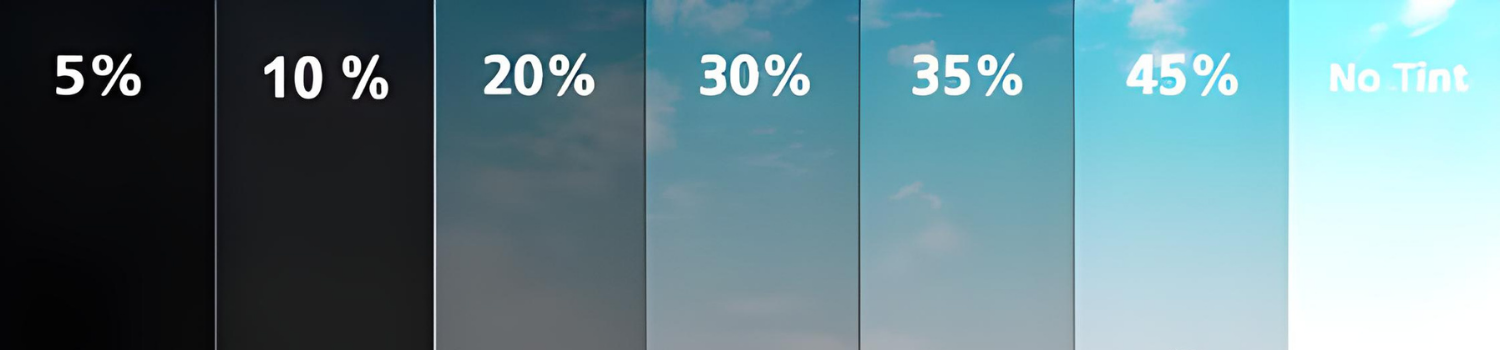
| Question | Short answer |
|---|---|
| Is it legal? | In most states; medical exceptions are written into state vehicle codes, but a few states have none |
| Do I need the DMV? | In some states; others accept physician documentation alone |
| How long does it take? | Often same day, and within 72 hours in physician-documentation states |
| How dark can I go? | It depends on the state; some allow darker tint, some only clear UV film or sun-screening devices, some neither |
| Will it stop a ticket? | No guarantee; officers retain discretion, and documentation is what you present |
| What if I do not qualify? | Full refund when the physician determines you do not qualify |
What Do Drivers Ask First in a Medical Tint Exemption FAQ?
The opening questions are almost always about legitimacy: what the document is, whether it is real, and whether an online process counts. A medical tint exemption FAQ has to settle those first, because everything else is wasted on a driver who still suspects the whole category is a loophole. It is not. In most states, medical exceptions are written into the vehicle code alongside the limits themselves, although a few states have none.
What is a medical window tint exemption?
It is written physician approval to run window tint darker than your state’s normal limit because of a medical condition. In some states that signed document is the entire requirement and you keep it in the vehicle. In others you submit it to a state agency and receive a permit, certificate, sticker or decal. The long version is in the guide to what a medical window tint exemption is.
Is a tint exemption the same as a window tint prescription?
They usually describe the same thing under different local vocabulary. States use exemption, exception, waiver, permit, certificate, affidavit, prescription, attestation and recommendation, and the word on your paperwork depends on which state issued it. A recommendation in a state with no medical exemption has no legal effect and does not prevent a citation. The terminology is untangled in the comparison of prescription vs exemption vs waiver vs permit.
Is it legal to get a medical tint exemption online?
Yes. A licensed physician can review your medical history and sign state-specific documentation without an office visit, and telehealth review is standard practice in 2026. What matters is that the physician is licensed in your state and the document contains what your state requires. See the guide on getting a medical tint exemption online.
Why do tint limits exist at all?
Visibility. Federal Motor Vehicle Safety Standard 205 requires at least 70% light transmittance in windows requisite for driving visibility on new passenger cars, and NHTSA states the purpose is “to ensure adequate visibility through the windows, thereby reducing the risk of a motor vehicle crash,” in its published interpretation letter. The federal rule binds manufacturers rather than owners, which is why aftermarket tint is governed by 50 different state laws.
Which States Offer Medical Tint Exemptions, and How Do They Differ?
Most states have a medical pathway, and they fall into three groups: states where the physician document is enough on its own, states where an agency reviews it and issues something in return, and a small group with no medical exemption, where a physician’s recommendation has no legal effect and does not prevent a citation. Which group your state sits in determines the timeline, the paperwork and what you end up carrying.
Which states allow medical tint exemptions?
Most of them, though the mechanisms differ widely. In some states the physician’s document is enough on its own, others require agency approval, and Colorado, Hawaii, Iowa, Kansas, Kentucky, North Dakota, South Dakota and Utah have no medical exemption for darker tint, Kansas and Pennsylvania allow only clear UV-filtering film for medical reasons, and California allows only removable sun-screening devices with a physician’s letter or clear UV film with a dermatologist’s certificate. The state-by-state breakdown is in the overview of states that allow medical tint exemptions.
Do I have to go through the DMV?
Only in some states, and not always the DMV specifically. Some states route applications through a state highway patrol, a department of public safety or another agency instead. Which office handles yours is covered in the guide to the DMV medical tint exemption question.
Does my exemption work in other states?
Not automatically, because no state is obligated to honor another state’s medical exemption. In practice, carrying your documentation and presenting it politely is what drivers do when crossing state lines, and outcomes depend on officer discretion. The reciprocity picture is covered in the guide on a tint exemption in other states.
Who Qualifies, and What Conditions Count?
Qualification is a physician’s judgment about whether reduced light or reduced sun exposure inside a vehicle is medically appropriate for you. The published condition lists are broad, and they are examples rather than a closed set. Qualification is always the physician’s call on your individual case.
What medical conditions qualify for a window tint exemption?
The conditions physicians consider include lupus, porphyria, xeroderma pigmentosum, albinism, photosensitivity dermatitis, melanoma and other skin cancer histories, light-sensitive eye conditions, vitiligo, autoimmune conditions, severe burns or scarring and sun sensitivity caused by medications. The full list with explanations is in the guide to medical conditions that qualify.
Does light sensitivity qualify for a tint exemption?
Light-sensitive eye conditions are among the conditions physicians consider. What the physician looks for is a diagnosed condition in which bright light or glare causes pain or impaired vision while driving. More detail is in the guide on light sensitivity and tint exemptions.
Can I qualify if my condition is not on the list?
Possibly. Published lists are illustrative, and physicians evaluate cases individually, so an unlisted condition can still support approval when reduced light exposure is medically appropriate. The reverse holds too: appearing on a list does not by itself guarantee approval, because the physician still has to review your situation.
Do medications that cause sun sensitivity count?
Drug-induced photosensitivity is a recognized medical basis, and it surprises a lot of drivers who never connected their prescription to how the sun feels on a commute. Several common drug classes carry photosensitivity warnings. Raise it explicitly during the questionnaire, because a physician cannot weigh a medication nobody mentioned.
How Much Does a Medical Tint Exemption Cost, and How Long Does It Take?
Cost and timing are the questions that decide whether a driver actually starts. An online medical exemption is typically a single flat, all-inclusive fee per state with no hidden charges, and the physician review is usually same day. Traditional routes take longer, since they involve booking an appointment with your own physician, paying an office visit fee, and then handling any state filing yourself.
How much does a medical tint exemption cost?
ForeverTint sells it as one flat, all-inclusive fee covering the physician review and the signed, state-specific document, with current promotions shown on the purchase page. States that require agency approval may add their own filing fee on top. The comparison against tickets and removal costs is in the guide to medical tint exemption cost.
How long does the process take?
In physician-documentation states, most drivers complete a short questionnaire, purchase, and an independent licensed physician reviews their chart, occasionally with a brief phone call. If they qualify, the signed document is emailed, usually the same day and within 72 hours; in Florida, the physician-signed Form HSMV 83390 is provided to submit to the FLHSMV. Agency-approval states add the state’s own processing time. The full walkthrough is in the guide on how to get a medical exemption for window tint.
What happens if the physician decides I do not qualify?
If the physician determines you do not qualify, you receive a full refund. That is why drivers who are unsure whether they qualify can simply ask.
How Dark Can You Go, and What Happens at a Traffic Stop?
These two questions are linked, because drivers who expect unlimited darkness are the ones who end up disappointed at the roadside. Where a state allows darker tint, an exemption usually raises your ceiling rather than removing it. And documentation changes how a stop resolves, not whether a stop happens.
How dark can I tint with a medical exemption?
It depends on your state. Where a state sets its own limit for exempt vehicles it varies, for example 35% on Virginia’s side windows and 60% on New Jersey’s front side windows, and some states set none. In some states darker film is not available for medical reasons at all: Colorado, Hawaii, Iowa, Kansas, Kentucky, North Dakota, South Dakota and Utah have no medical exemption for darker tint, Kansas and Pennsylvania allow only clear UV-filtering film for medical reasons, and California allows only removable sun-screening devices with a physician’s letter or clear UV film with a dermatologist’s certificate. The honest answer by state is in the guide on how dark you can tint with a medical exemption.
Can I tint my windshield with an exemption?
Almost never across the full windshield. Most states permit tint only above the AS-1 line or within the top four to six inches of glass, and a medical exemption rarely changes that rule. Exemptions typically apply to the front side windows, which is where standard limits create the real problem for light-sensitive drivers.
Will an exemption stop me from getting a ticket?
No, and any service that promises otherwise is overselling. Physician documentation for darker window tint does not guarantee you will not be stopped or cited, because officers retain discretion. If you are cited, what happens next is up to the court. What to do in the moment is covered in the guide on being pulled over with a tint exemption.
How Long Does It Last, and What Happens With Other Vehicles?
Duration and portability are the questions drivers ask after approval rather than before, and both answers are state-specific. Terms run from one year to permanent, and some exemptions attach to the person while others attach to a vehicle. Knowing which applies to you prevents an expired document in the glovebox and an unpleasant surprise after buying a new car.
How long does a medical tint exemption last?
Anywhere from one year to indefinitely, depending on the state. Annual recertification, two-year updates, three-year, four-year and five-year terms all exist, and some states set no expiration at all. The state-by-state terms are in the guide on how long a medical tint exemption lasts, and Tint Exemption Renewals are available in one-year, three-year and ten-year terms.
Does my exemption transfer to a new car or another driver?
It depends on whether your state issues the exemption to the person or to the vehicle. Person-based exemptions generally follow you into any vehicle you occupy, while vehicle-based ones end when that car is sold and require new paperwork for the next one. Check your own state’s wording before you buy or sell.
Is a medical tint exemption FAQ enough, or do I need state-specific guidance?
A general medical tint exemption FAQ answers the structural questions, but the numbers that matter, your visible light transmission floor, your issuing office and your renewal term, are all set by your state. Use this page to understand the shape of the process, then check your own state before you buy film. Ten common misconceptions are cleared up in the guide to window tint exemption myths.
Frequently Asked Questions
Do I need a medical exemption for factory privacy glass?
No. Factory privacy glass on SUVs, vans and trucks is usually around 15% to 20% visible light transmission on the rear windows and is legal because most states apply looser rules behind the driver. An exemption becomes relevant when you want aftermarket film on the front side windows, where nearly every state sets a strict limit.
Can passengers or children be covered by a medical exemption?
In many states, yes, because the medical need belongs to a person rather than to the driver’s seat. A child with a photosensitive condition or a passenger with lupus can be the basis for an exemption on the family vehicle in states that issue to the person. Confirm the wording for your own state, since vehicle-based states handle this differently.
Do I have to see a doctor in person to get one?
Not with an online process. An independent licensed physician reviews your chart, occasionally with a brief phone call, with no video visit and no physical exam. The signed, state-specific document is then emailed to you, or mailed in states that require original signatures.
What happens when my tint exemption expires?
You renew it, and in most cases that is simpler than the first application because your qualifying condition has already been reviewed. Renewal terms vary by state, and some exemptions for permanent conditions never expire at all. Keeping an eye on the date matters, because an expired document is treated the same as no document at a traffic stop.
Can rideshare, delivery or commercial drivers get an exemption?
Yes, and people who drive for a living are among the drivers with the strongest cumulative sun exposure. The medical standard is the same regardless of occupation, so approval still rests on a physician determining that reduced light is appropriate for your condition. Commercial vehicle rules can add separate equipment requirements, so check those alongside the tint limit.
Conclusion
The short version of this medical tint exemption FAQ is that the document is real, the process is faster than drivers expect, the darkness has a ceiling, and the paperwork is what makes a citation defensible rather than preventable. Across 29 vehicles from 15 manufacturers, side windows blocked only 71% of UVA against 96% for windshields per JAMA Ophthalmology in 2016, and 52% of melanomas occurred on the left side of the body in the 2011 Journal of the American Academy of Dermatology analysis of federal cancer registry data. Customer reviews are on Trustpilot. To find your state’s rules, See If You Qualify, or Contact Us Today with a question this page did not answer.
This article is for general informational purposes and is not legal or medical advice. Physician documentation for darker window tint does not guarantee you will not be stopped or cited; officers retain discretion, and requirements vary by state.