
Sun glare driving conditions get measurably worse between September and November, and the reason is geometry rather than weather. As the sun tracks lower across the sky each week through fall, sunrise and sunset shift directly into the hours most people commute, and low-angle light comes straight through the windshield instead of down onto the roof. Add wet leaves, a dusty windshield and a dirty low sun and you get the hardest driving light of the year.
Sun glare is the visual impairment that happens when bright, direct or reflected light overwhelms the eye’s ability to adapt, washing out contrast and hiding objects that are otherwise in plain sight. For drivers it is not just uncomfortable, it temporarily removes information you need.
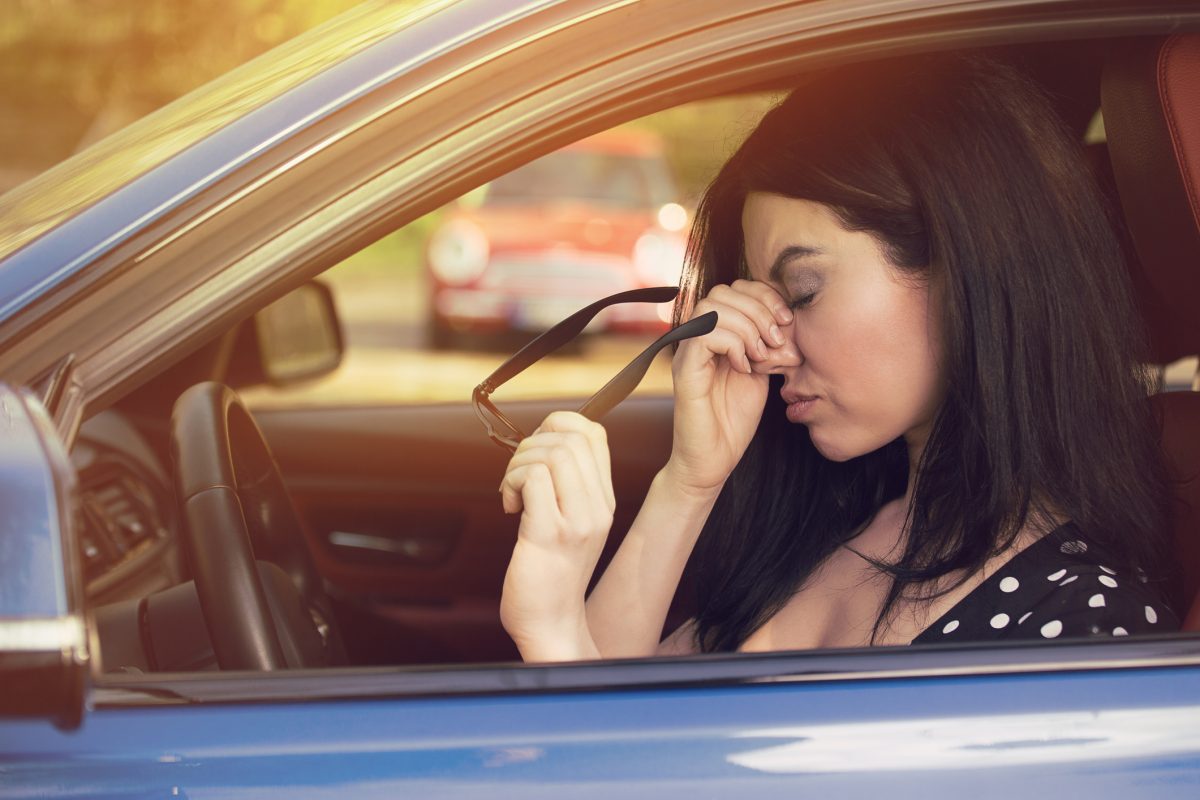
Why Is Sun Glare Driving Worse in the Fall?
Fall sun glare driving is worse because the sun’s path drops low enough to sit near eye level during both rush hours at the same time that clocks and daylight hours shift. In mid-summer the sun is high and steep during the morning and evening commute. From late September onward it rises later and sets earlier, and it does so at a shallow angle that puts it just above the horizon precisely when traffic peaks.
Road orientation makes it worse. An east-west commute in fall means driving into the sun both ways, morning and evening, day after day. Fall conditions also add contrast problems that summer does not: wet leaves and damp pavement reflect low sun like a mirror, and the film of dust and road grime that builds on a windshield scatters light rather than letting it pass through cleanly.
What Time of Day Is Sun Glare Worst?
Sun glare is worst in the roughly 30 to 60 minutes after sunrise and before sunset, when the sun sits between about 0 and 10 degrees above the horizon. At that angle a visor cannot block it without also blocking the road, and sunglasses cut brightness without restoring lost contrast. Those windows land squarely in the fall commute.
Crash data reflects the general afternoon and evening risk. The Insurance Institute for Highway Safety reports that in 2024, about one-third of crash deaths, 32%, occurred between 3 p.m. and 9 p.m. Glare is only one factor inside that window, but it is a factor that gets worse every week from September onward.
How Dangerous Is Glare Behind the Wheel?
Bright sunlight is associated with a meaningfully higher risk of a serious crash, and the effect has been quantified. Redelmeier and Raza, publishing in Medicine in 2017, analyzed 11,095 life-threatening motor vehicle crashes from 1995 through 2014 and found a 16% increased risk of a life-threatening crash during bright sunlight, with a 95% confidence interval of 9% to 24%.
State crash records show the same pattern from the ground up. A 2022 study in Transportation Research Record examined seven years of Louisiana Department of Transportation and Development crash narratives from 2010 through 2016 and identified 1,450 crashes in which a driver named sun glare as the primary contributing factor. Those are only the crashes where glare was explicitly reported, which makes the figure a floor rather than a ceiling.
The mechanism is simple enough to picture. Glare washes out the contrast that lets you separate a pedestrian from a shadow, a brake light from a sunlit bumper, or a cyclist from a hedge. Recovery from a bright flash takes several seconds, and at 45 miles per hour a car covers roughly 66 feet every second of that recovery.
Why Is Fall Glare Harder for Light-Sensitive Drivers?
For drivers with photophobia, fall glare is not just harder to see through, it hurts. The American Migraine Foundation reports that between 85% and 90% of people with migraine experience sensitivity to light, among roughly 40 million Americans living with migraine. For those drivers, a low-sun commute can trigger an attack rather than merely strain the eyes.
The same applies to people with dry eye disease, corneal conditions, recent eye surgery, lupus, multiple sclerosis, concussion recovery and medication-induced photosensitivity. Standard car glass does little to help. A 2016 study in JAMA Ophthalmology measured 29 vehicles from 15 manufacturers and found windshields blocked an average of 96% of UVA light while side windows blocked only 71% on average, in a range of 44% to 96%.
Always consult with your healthcare provider about your condition; only a licensed physician can determine whether darker window tint is medically appropriate for you. If light sensitivity is your core issue, our guide to light sensitivity and window tint exemptions goes deeper.
How Do You Reduce Sun Glare While Driving?
The most effective glare reductions are the unglamorous ones: clean glass, a longer following distance and a route or timing change. Each tactic has a real limitation, and knowing the limitation is what keeps you from relying on the wrong one.
| Tactic | What it does | Limitation |
|---|---|---|
| Clean the inside and outside of the windshield | Removes the film that scatters light into a white haze | Has to be repeated often in fall, when road grime builds fast |
| Use the sun visor | Blocks the sun when it sits higher than about 10 degrees | Useless at true low-sun angles without also hiding the road |
| Polarized sunglasses | Cuts reflected glare off wet pavement and other vehicles | Reduces overall brightness, so it can hurt in tunnels and shade |
| Increase following distance | Buys seconds of reaction time while your eyes recover | Does nothing about what you cannot see ahead |
| Shift departure time or route | Avoids the worst 30 to 60 minute window or an east-west leg | Not available to most commuters and shift workers |
| Darker side window tint with a medical exemption | Reduces light entering through side glass, where limits are tightest | Requires physician documentation and stops short of the windshield |
A Sun Glare Driving Checklist for the Fall Commute
Before a low-sun commute, take five minutes: clean both sides of the windshield, refill washer fluid, check that your wipers are not smearing, keep polarized sunglasses in the door pocket rather than the glovebox, and top off the visor with a clip-on extender if your sightline needs it. Then drive the first mile deliberately, at a longer following distance, until your eyes settle. This sun glare driving routine costs nothing and addresses the two biggest variables: glass clarity and reaction time.
Can a Medical Tint Exemption Help With Glare?
A medical tint exemption can help with glare through the side windows, which is where most state limits are tightest and where factory glass does the least work. It is not a fix for windshield glare: windshield rules stay strict in nearly every state, typically allowing film only above the AS-1 line. What an exemption changes is the light load coming through the driver’s door and passenger windows, which matters most for photophobia and skin conditions.
According to Derek Anderson at ForeverTint: “Fall is our busiest glare season, because drivers who managed through summer suddenly find the sun sitting directly in their eyes on both ends of the commute.”
Realistically, most state programs that grant a darker level stop somewhere in the 20% to 35% VLT range on front side windows, so an exemption is a documented step down from the standard limit rather than unlimited darkness. ForeverTint handles the review remotely: you answer a short questionnaire, purchase the Medical Window Tint Exemption Package for your state, and a licensed physician either reviews your chart or calls you for a brief two to ten minute verification, with no video appointment and no in-person exam. Documentation is emailed the same day in most cases and within 72 hours at the outside. To get started before winter, See If You Qualify, or read what a medical window tint exemption is first.
Frequently Asked Questions
Why does sun glare seem worse in September and October than in July?
The sun sits much lower in the sky during fall commuting hours. In midsummer the sun is high and steep during rush hour, while from late September onward sunrise and sunset move into the commute and the light arrives at a shallow angle near eye level. Wet leaves and damp pavement add reflected glare that summer roads produce less often.
Is a driver legally responsible for a crash caused by sun glare?
In most cases yes. Glare is treated as a foreseeable driving condition rather than an excuse, much like rain or fog, and drivers are generally expected to slow down, increase following distance or pull over safely when they cannot see. Local law varies, so a specific crash is a question for a licensed attorney in your state.
Does window tint help with windshield glare?
Very little, because nearly every state restricts windshield film to the strip above the AS-1 line or the top few inches of glass. Tint helps most on the side windows, which is where legal limits are tightest and where factory glass blocks the least light. A medical exemption changes what you can run on the sides, not on the windshield.
Can I get a medical tint exemption specifically for glare sensitivity?
Glare sensitivity is commonly documented as part of a broader diagnosis such as migraine with photophobia, dry eye disease, corneal conditions, recent eye surgery or an autoimmune condition. Most state programs ask a licensed physician to certify medical necessity rather than to match a diagnosis code, so a physician who can link your glare symptoms to a documented condition is what matters.
Conclusion
Fall sun glare driving is a predictable annual hazard, not bad luck: the sun drops into your sightline during both commutes from September through November, contrast collapses, and crash risk rises with it. Clean glass, longer following distances and better timing carry most of the load, and for drivers whose eyes or skin genuinely cannot tolerate the light, a physician-documented medical tint exemption addresses the side windows where state limits are tightest. Want to know whether your condition qualifies before winter? Contact Us Today.
This article is for general informational purposes and is not legal or medical advice. Physician documentation for darker window tint does not guarantee you will not be stopped or cited; officers retain discretion, and requirements vary by state.