
This guide to “California Window Tint laws and exemptions” Includes:
- What is a California Window Tint Exemption
- The baseline California tint rules
- What the California medical exemption does (and doesn’t) allow
- What Are the Requirements for a California Window Tint Exemption
- Who qualifies for a California Medical Window Tint Exemption
- What documentation to keep in your vehicle while driving in California
- A step-by-step process to do it the right way in California
What is A California Window Tint Exemption:
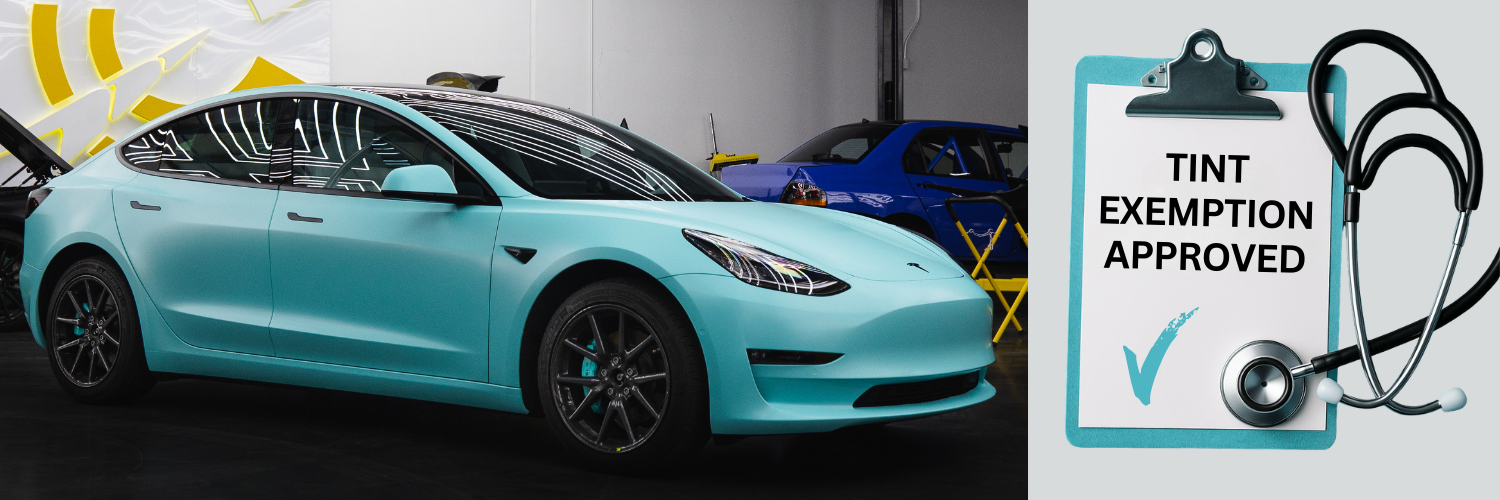
A California window tint exemption is a legal provision under California Vehicle Code §26708 that allows certain drivers to install specific window film when medically necessary due to UV sensitivity. Rather than permitting dark or privacy tint, the exemption typically applies to clear, colorless, transparent UV-protective film that meets required light transmission standards. To qualify, a licensed medical professional must determine that UV exposure is harmful and provide proper documentation. Drivers using a medical exemption must remain compliant with visibility and safety laws and keep documentation in their vehicle in case of a traffic stop.
Baseline window tint rules you need to know for California:
Before delving into what is allowed with a tint exemption, it is important to understand the baseline laws for California vehicle window tint:
-
Windshield: Tint is generally limited (commonly the top strip area; rules focus on visibility and placement).
-
Front side windows: Must allow at least 70% visible light transmission (VLT) under the standard rule.
-
Rear side + rear window: Can be darker, but rules vary by vehicle type and mirror requirements.
Learn more about California’s baseline window tinting rules on our California Medical Window Tint Exemption page.
What California’s medical tint exemption actually allows
California Vehicle Code section 26708 includes a medical provision that allows drivers with qualifying conditions to operate vehicles with window tint that would otherwise not be permitted under standard visibility rules. While the statute references clear, colorless, transparent film in certain sections, approved medical exemptions can allow individuals to legally use darker window tint when proper medical documentation supports the need for increased UV protection.
The law outlines requirements such as:
-
A medical certificate signed by a licensed physician (commonly a dermatologist) confirming that the individual should not be exposed to ultraviolet radiation due to a medical condition
-
Compliance with applicable safety standards
-
Possession of the documentation in the vehicle at all times
The Requirements for a California Window Tint Exemption
California law allows certain drivers to qualify for a medical window tint exemption, but approval depends on meeting specific legal and medical standards. While every case is evaluated individually, the following factors are generally required for a valid exemption:
-
Qualifying Medical Condition: An exemption is typically granted when a documented medical condition makes exposure to ultraviolet (UV) radiation harmful. These conditions often involve heightened sensitivity to sunlight or disorders where UV exposure can worsen symptoms. The need must be medically necessary—not simply for comfort, glare reduction, or privacy.
-
Written Certification from a Licensed Medical Professional: To validate the exemption, a licensed physician must provide written documentation confirming the medical necessity for additional UV protection. The certification should clearly identify the patient and explain why window tint is required due to the condition. Without proper medical documentation, darker tint remains subject to standard California tint restrictions.
-
Valid Documentation Carried in the Vehicle: Drivers operating under a medical exemption must keep their supporting documentation inside the vehicle at all times. If stopped by law enforcement, the exemption must be demonstrated through valid paperwork. Failure to provide documentation may result in a citation, even if the individual qualifies medically.
-
Continued Compliance with California Tint Regulations: A medical exemption does not eliminate all tint laws. Certain color restrictions and safety requirements still apply. For example, red, amber, and blue tints remain prohibited, and the vehicle must maintain safe visibility standards. The exemption allows additional UV protection when medically necessary, but it does not override all vehicle safety regulations.
Who Qualifies for a California Medical Window Tint Exemption?
If you’re wondering whether you qualify for a California medical window tint exemption, the key question is simple: Does exposure to ultraviolet (UV) light worsen or trigger your medical condition? California’s window tint exemption is designed for individuals whose health is negatively affected by sunlight while driving.
You may qualify if you have a diagnosed condition where UV exposure can cause harm, flare-ups, or increased health risks. Common qualifying categories often include:
-
Severe photosensitivity disorders such as: Polymorphous Light Eruption (PMLE), Solar urticaria (sun-induced hives), Chronic actinic dermatitis, Porphyria (including Porphyria Cutanea Tarda), Xeroderma Pigmentosum (XP), Actinic prurigo, and Hydroa vacciniforme.
-
Autoimmune conditions such as: Systemic Lupus Erythematosus (SLE), Cutaneous Lupus, Dermatomyositis, Sjögren’s Syndrome, Mixed Connective Tissue Disease, and Antiphospholipid Syndrome.
-
Skin conditions requiring strict UV avoidance such as: History of melanoma, recurrent basal cell carcinoma, squamous cell carcinoma, extensive or recurring actinic keratosis, albinism, vitiligo in cases of extreme UV vulnerability, and severe rosacea triggered by sun exposure.
-
Medical treatments that increase sensitivity to sunlight such as: Chemotherapy, radiation therapy, isotretinoin (Accutane), tetracycline antibiotics, doxycycline, sulfa medications, thiazide diuretics, retinoids, certain antifungal medications, and certain psychiatric medications.
The exact diagnosis matters less than the medical necessity. What truly determines eligibility is whether a licensed medical professional confirms that UV exposure is harmful to you and recommends additional protection while operating a vehicle. If your doctor determines that driving in sunlight without added protection poses a health risk, they can provide written documentation supporting your need for window tint under California law.
Step-by-step: How to get a medical tint exemption in California
This is where your new blog can outperform both competitors—by being clearer, more “doable,” and more accurate.
Step 1: Confirm that you may have a qualifying condition
-
Severe photosensitivity disorders
-
Autoimmune conditions
-
Skin conditions requiring strict UV avoidance
-
Medical treatments that increase sensitivity to sunlight
Step 2: Talk to a qualified medical professional
When preparing for your consultation, be ready to explain:
-
What symptoms UV exposure triggers (rashes, migraines, flare-ups, fatigue, skin reactions, etc.)
-
How sunlight affects your diagnosed condition
-
Why additional UV protection while driving is medically necessary
Option 1: You can schedule an in-person appointment with your primary care provider, dermatologist, or specialist. During the visit, they can evaluate your condition and determine whether medical documentation for a window tint exemption is appropriate.
Option 2: Alternatively, you may choose to complete your evaluation online through a telehealth provider such as ForeverTint who offers assistance for Online Window Tint Exemptions for California. Through a remote consultation, licensed physicians review your condition and determine whether you qualify under California guidelines. This process does not require an in-office visit and you receive your documentation within 24 hours.
Step 3: Once Approved Keep Your Certificate In Your Vehicle
Once you are approved for a California medical window tint exemption, keep your certificate or medical documentation in your vehicle at all times. If you are stopped for window tint, you must be able to present proof that your darker tint is medically authorized. Storing a clear, up-to-date copy in your glove box helps prevent confusion or citations and ensures you remain compliant under California law.
Step 4: Choose and Install Compliant Film Properly
Select a high-quality, reputable window film with documented UV performance and appropriate visible light transmission (VLT) specifications, and avoid reflective or mirrored films that may attract enforcement attention. Keep product documentation available in your vehicle to support compliance if needed. Just as important, ensure the film is professionally installed and maintained in good condition, as bubbling, peeling, haze, or visible damage can obstruct visibility and raise concerns during a traffic stop.
What Documentation Should You Keep in Your Car?
To reduce the risk of citations, it is wise to keep a simple compliance packet in your vehicle at all times. The most important document is your medical certificate or letter from a licensed physician confirming that you have a condition requiring protection from ultraviolet (UV) exposure. The letter should clearly identify you as the patient and explain that UV exposure is medically harmful in your case. Ideally, it should include the provider’s name, signature, office contact information, and a clear recommendation for window tint or clear, colorless, transparent UV-protective film as medically necessary. Having complete and clearly written documentation makes it easier to demonstrate compliance if questioned during a traffic stop.
In addition to medical documentation, it is also helpful to keep installation paperwork related to the window film. While not always required in every situation, documentation showing the film product name, specifications such as UV rejection percentage and visible light transmission (VLT), an itemized receipt, and the installer’s business information can further support your compliance. These materials help demonstrate that your tint was professionally installed and selected with legal standards in mind, which can strengthen your position if your vehicle is inspected or you are asked to verify your exemption.
What happens if you get pulled over for tint in California?
Even if you’re compliant, tint is an easy visual “probable cause” for a stop because officers can’t measure VLT by sight, and many drivers run illegal front tint. (This is one reason having your documentation ready matters.) If you’re stopped:
-
Be ready to show your medical documentation calmly.
-
Explain that your film is clear UV-protective and you keep the certificate in the vehicle.
-
If you receive a correctable citation anyway, follow the instructions for correction and proof.

Frequently asked questions:
Can a medical exemption let me tint my front windows darker than 70% in California?
Yes, a properly approved medical window tint exemption can allow you to operate with darker front window tint than the standard 70% Visible Light Transmission (VLT) requirement. However, you must have valid medical documentation confirming that darker tint is medically necessary. Without documentation, standard California tint laws still apply.
Does the medical exemption apply statewide?
Yes, California Vehicle Code applies statewide, meaning a valid medical window tint exemption is recognized throughout California. That said, enforcement practices may vary slightly by region, so it is important to keep your documentation in your vehicle at all times.
Do I need to register my exemption with the DMV?
In most cases, the exemption is validated through proper medical documentation rather than a separate DMV registration process. The key requirement is carrying your approved certificate in your vehicle. If you are unsure about additional administrative steps, you can confirm directly with the California DMV.
Can I tint my windshield with a medical exemption?
A medical exemption may allow tint on the windshield if it is medically necessary and properly documented. However, visibility and safety standards still apply, and the tint must comply with applicable regulations. Always ensure your documentation clearly supports the need for additional UV protection.
Is dark tint legal with a medical exemption in California?
Dark tint can be legal if you have an approved medical exemption and proper documentation supporting your need for increased UV protection. The exemption does not automatically permit any shade, but it does provide a lawful pathway for medically necessary tint that would otherwise be restricted.
What paperwork do I need to carry?
You should carry your medical certificate or physician’s documentation confirming that UV exposure is harmful and that window tint is medically necessary. Keeping installation paperwork and product specifications in your vehicle can also help demonstrate compliance during a traffic stop.
Compliance note: This article is informational, not legal advice. If you want to confirm how the law applies to your situation, consult the DMV, CHP, or a qualified attorney.