
If you’re wondering how to get a medical window tint exemption in Ohio, the process is much easier than many drivers expect. Under Ohio Administrative Code 4501-41-05, Ohio’s tint rules do not apply to a vehicle registered in Ohio to a person with a qualifying physical condition, or to that person’s parent, legal guardian, or spouse, when the required affidavit is in the vehicle. Instead of applying for a special permit through the Bureau of Motor Vehicles, qualifying drivers receive a medical affidavit from a licensed Ohio physician or licensed Ohio optometrist stating that darker window tint is medically necessary.
Many people begin searching for an exemption after discovering that sunlight, glare, or ultraviolet exposure aggravates an existing medical condition. Others first learn about the exemption after receiving a tint citation or speaking with a window tint installer. Regardless of how you found the process, understanding each step helps ensure you remain compliant with Ohio law while obtaining the additional protection you need.
The good news is that Ohio’s exemption process is straightforward. Once you understand what documentation is required and who can issue it, obtaining your exemption becomes much simpler.
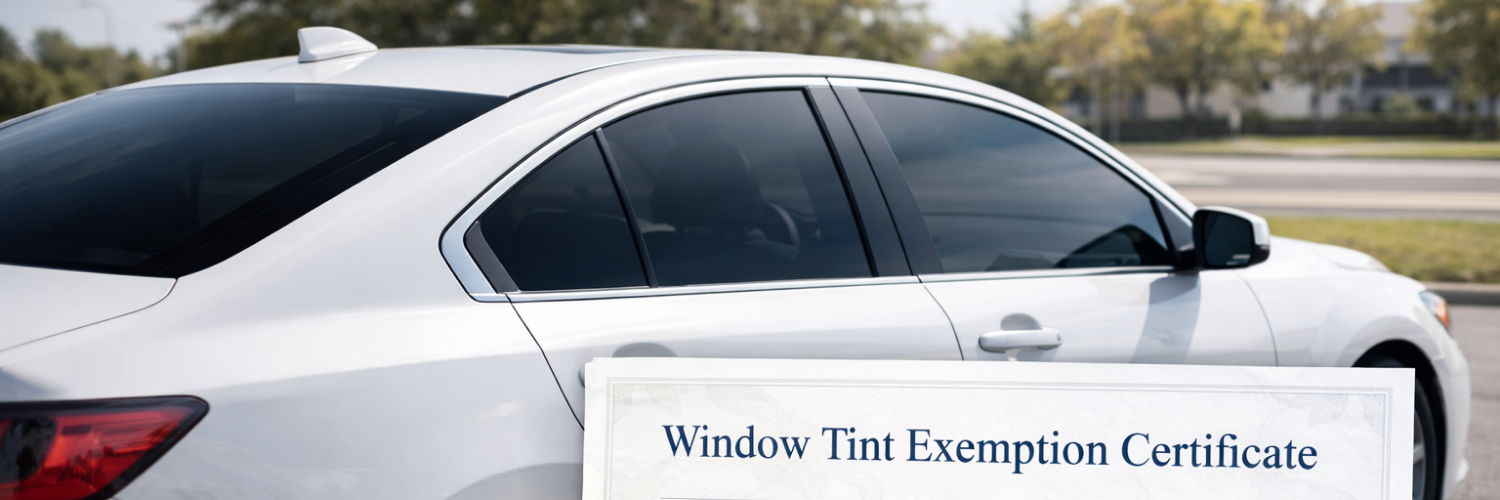
Step 1: Determine Whether You May Qualify
The first step is determining whether your medical condition may qualify for additional protection from sunlight while driving. Ohio Administrative Code 4501-41-05 allows exemptions for individuals whose physical condition requires sunscreening material that would otherwise exceed the state’s normal tint limits.
Conditions physicians commonly evaluate include lupus, porphyria, xeroderma pigmentosum, albinism, photosensitivity dermatitis, melanoma and other skin cancers, and light-sensitive eye conditions. Every case is reviewed individually, and approval depends on medical necessity rather than a specific diagnosis alone.
If sunlight regularly causes pain, discomfort, or worsens your symptoms, it may be worthwhile to discuss your condition with a licensed medical provider.
Step 2: Complete a Medical Evaluation
Once you believe you may qualify, the next step is completing a medical evaluation with a licensed Ohio physician or licensed Ohio optometrist. During the evaluation, the provider reviews your medical history, discusses your symptoms, and determines whether darker window tint is medically appropriate.
This evaluation is the foundation of Ohio’s exemption process. Unlike states that require approval from a government agency, Ohio relies on licensed healthcare professionals to determine whether an exemption is medically justified.
Because every applicant’s medical history is different, physicians review each case individually before deciding whether to complete the required affidavit.
Step 3: Receive Your Medical Affidavit
If your physician determines that darker window tint is medically necessary, they complete the affidavit recognized under Ohio Administrative Code 4501-41-05. This signed document serves as your legal proof that your darker window tint is supported by a qualifying medical condition.
The affidavit is one of the most important parts of the entire process because it replaces the need for a separate state-issued permit. Instead of applying through the Bureau of Motor Vehicles, qualifying drivers carry this documentation whenever operating the vehicle.
Rule 4501-41-05 requires the affidavit to be in the possession of the affected person or the driver at all times while in the vehicle. The exemption applies to a vehicle registered in Ohio to the affected person or to that person’s parent, legal guardian, or spouse. Keeping it inside your vehicle helps demonstrate compliance if law enforcement questions your darker window tint.
Step 4: Install Your Window Tint
After receiving your medical documentation, you can move forward with having your vehicle professionally tinted. Choosing an experienced installer familiar with Ohio’s tint laws helps ensure your vehicle receives high-quality window film that provides excellent protection from sunlight and ultraviolet exposure.
Rule 4501-41-05 does not set a separate darkness limit for an exempt vehicle, but selecting film that fits your medical need and keeps good visibility is still important. High-quality window tint can significantly reduce glare, improve comfort, and block harmful UV rays while maintaining excellent visibility.
How ForeverTint Makes the Process Easier

Finding a physician familiar with Ohio’s medical window tint exemption process can sometimes be challenging. ForeverTint simplifies everything: an independent physician licensed in Ohio reviews your medical history by chart review or, occasionally, a brief phone call.
After purchasing an Ohio Medical Window Tint Exemption, the physician review begins and our team walks you through every step. If you qualify, your signed medical affidavit is delivered electronically so you can print it and keep it inside your vehicle before driving with darker window tint.
Because every evaluation is based on medical necessity, the physician reviews each applicant individually. If the physician determines you do not qualify, you receive a full refund.
Why Following the Correct Process Matters
Some drivers mistakenly believe they can simply obtain darker window tint and explain their medical condition later if questioned by law enforcement. Unfortunately, that approach can lead to unnecessary citations because the exemption applies only when the signed affidavit is with the affected person or the driver in the vehicle.
Completing the exemption process before installing darker window tint provides peace of mind and allows you to drive confidently knowing you have the proper documentation required under Ohio Administrative Code 4501-41-05.
Get Started With Your Ohio Medical Window Tint Exemption
Obtaining a medical window tint exemption does not have to be complicated. By following the proper process and working with a licensed medical provider, qualifying Ohio drivers can legally receive the additional protection they need from sunlight while remaining compliant with state law.
If you believe your medical condition may qualify, ForeverTint makes the process simple from beginning to end. Learn more about the requirements by visiting our Ohio Window Tint Exemption page or begin today by purchasing your Ohio Medical Window Tint Exemption. You can also see why so many customers trust our service by reading our ForeverTint Reviews.
Frequently Asked Questions
How do you get a medical window tint exemption in Ohio?
An Ohio-licensed physician or optometrist reviews your medical history and decides whether you have a physical condition that makes darker window tint necessary. If so, they sign an affidavit stating that. You keep the affidavit with you, or with whoever is driving, whenever you are in the vehicle; there is no state application.
Do I need to visit the Ohio Bureau of Motor Vehicles?
No. Ohio does not require drivers to obtain a separate permit through the Bureau of Motor Vehicles. The signed medical affidavit serves as the legal documentation supporting your exemption.
Can I complete the evaluation online?
Yes. ForeverTint connects you with an independent physician licensed in Ohio who reviews your medical history by chart review or, occasionally, a brief phone call, so there is no in-person office visit.
How long does the process usually take?
After your purchase, an independent physician licensed in Ohio reviews your medical history. If you qualify, your signed affidavit is delivered electronically.
What happens if I do not qualify?
If the physician determines you do not qualify, you receive a full refund.
Do I need to keep my medical affidavit inside my vehicle?
Yes. Ohio Administrative Code 4501-41-05 requires the affidavit to be in the possession of the affected person or the driver at all times while in the vehicle. Keeping it in your vehicle helps demonstrate compliance during a traffic stop.
What medical conditions may qualify for an Ohio window tint exemption?
Ohio law does not list specific conditions; it requires a physical condition that makes darker sunscreening necessary, as stated in a signed affidavit. Conditions a physician may consider include lupus, porphyria, xeroderma pigmentosum, albinism, photosensitivity dermatitis, melanoma and other skin cancers, and light-sensitive eye conditions. An independent licensed physician decides whether your condition qualifies.

